

Case study
OilEx
Modular workflow digitalisation
- Role
- Product design manager
- Timeframe
- 8 months
- Design team
- 2
- Development team
- 8
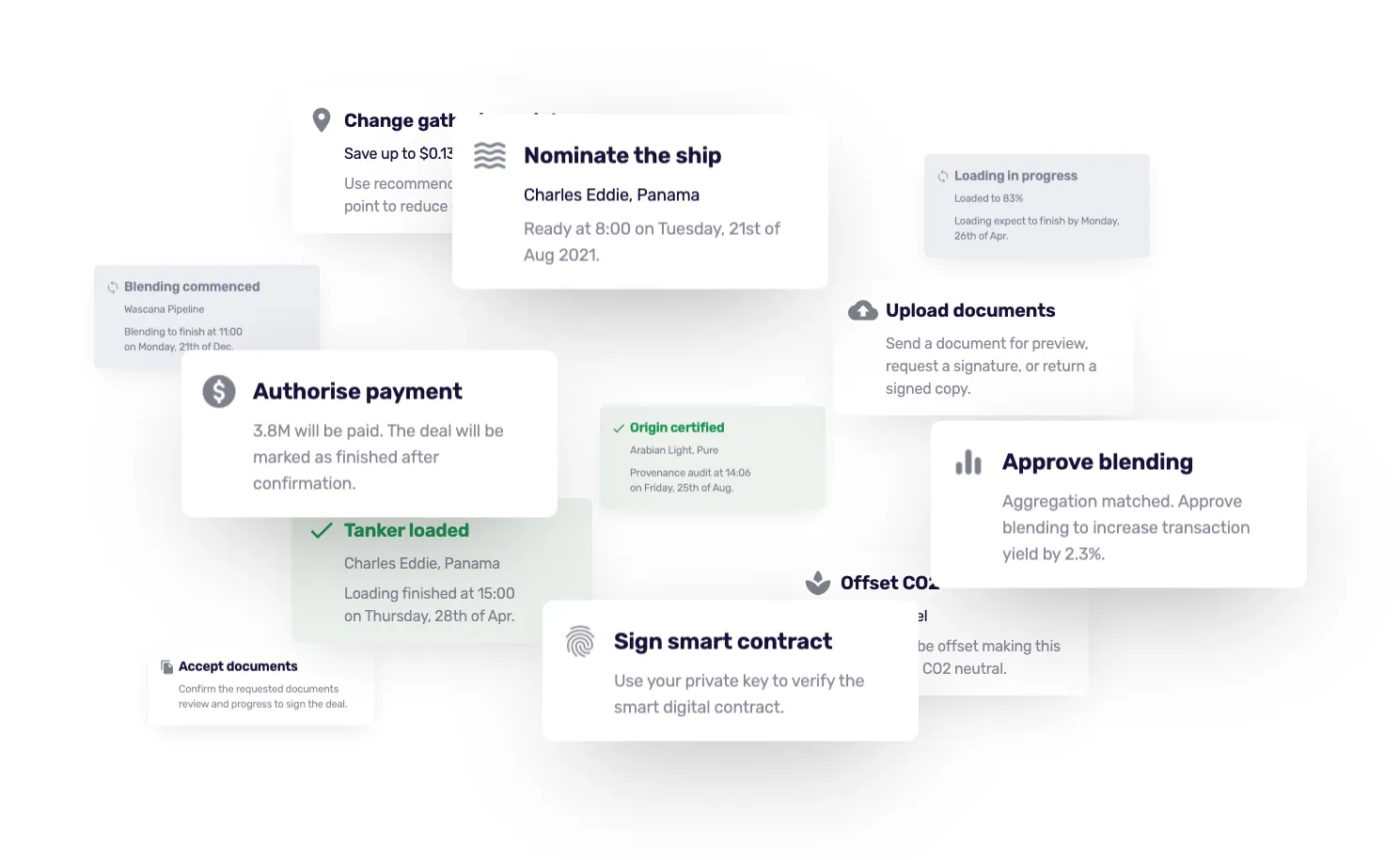
- Deal Actions: a toolbox of interactive cards next to the deal conversation
- Every action recorded on the ledger as an activity log
- Modular, flexible & extendable components through 2 product pivots
- Every selling & buying side deal action scenario outlined, with detailed user stories
- Product website design & development (Webflow)
At Hunter Technology, I worked with our product strategist Ilya Belikin on the company’s flagship product OilEx, a physical oil trading platform. We pioneered a modular interactive pattern while tuning and growing the product amid direction shifts.
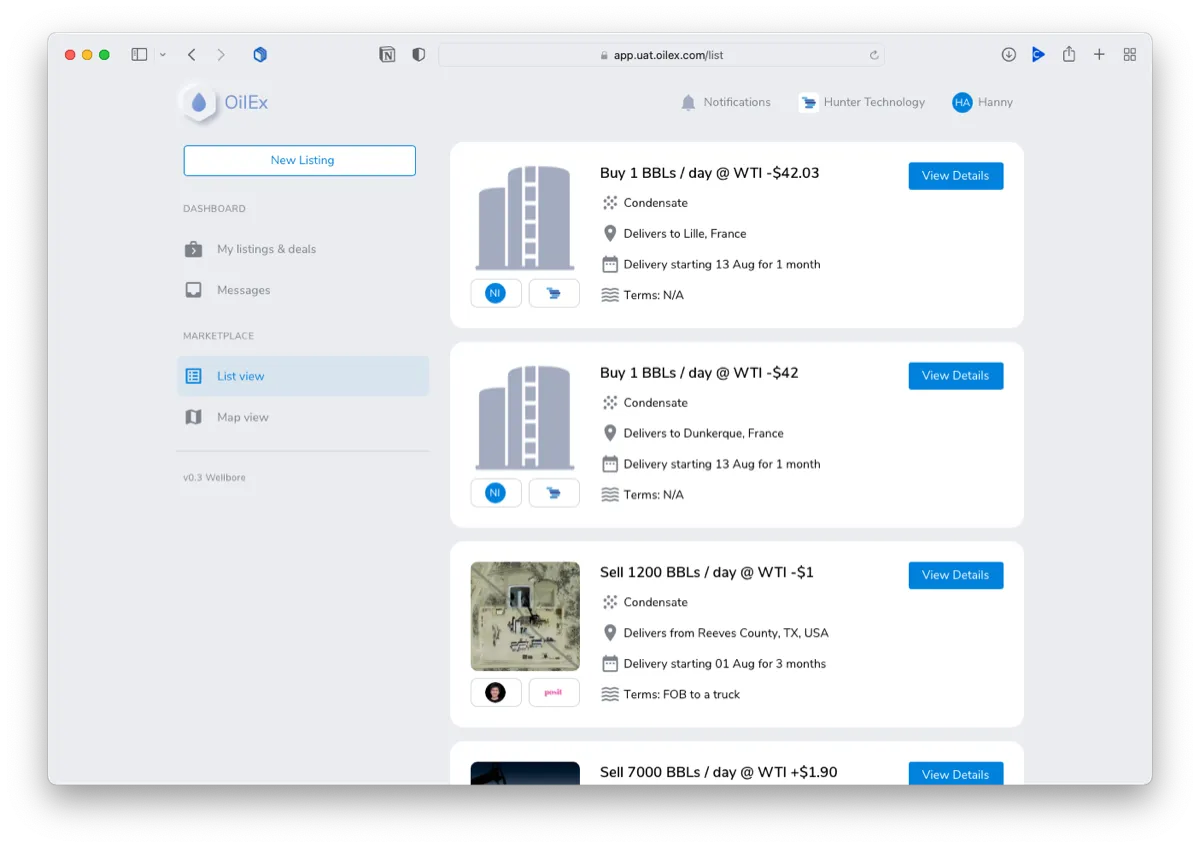
OilEx is a digital marketplace connecting independent oil producers with global buyers. It provides a digital workflow for physical crude oil trade: from deal discovery to negotiation, contracts and settlement.
Key responsibilities
- Product design ownership & user stories planning
- Product communications with frontend & backend developers
- High-fidelity prototyping & design documentation (Figma & Whimsical)
- Product website design & development (Webflow)
Workflow digitalisation
OilEx digitalises physical oil transaction workflows. With the integration of blockchain smart contracts, some form of process formalisation has to be implemented to record and indicate the status of a deal: what’s been agreed, what’s been delivered, and so on.
It would be natural to think of a stepper like how Amazon iconically does it in their checkout process. However, we weren’t sure about all the required / optional steps for a transaction, and they work differently for different businesses. We also found partners that shifted the product direction twice: a 1st pivot to a B2B SaaS model, a 2nd to commodities beyond oil. With continuous shifts in direction, the design team focused on components that are modular, flexible and extendable.

Deal Actions
Until robots take over, we’re sure of this common element in all transactions - people need to talk. We already have a chat component for people to connect with each other, negotiate terms, and facilitate shipping and payment. There could be a way for a more flexible and modular “stepper” to be integrated within. So we put Deal Actions next to the conversation view: a set of interactive cards showing what has been done, can be done now, and to be done in the future.
Users wouldn’t feel limited by a linear set of platform-defined transaction steps, because they can dynamically pick from a toolbox of actions along their conversations. Each action is the trigger for additional inputs, such as updating the price of the deal or uploading documents, so users maintain a sense of control rather than being forced by the system to update statuses.
The system is recording every action on the ledger, not allowing critical checkpoints to be lost in free-flow messages. These records form an activity log for involved parties, and facilitate actions automatically for the user, such as declining other leads for the same listing when a deal is signed.
Behind the scenes
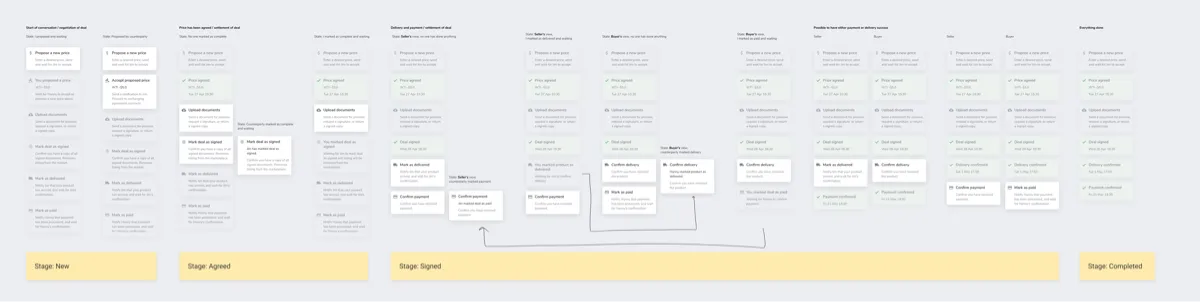
The caveat of such a flexible design is the logic and conditions powering it. We had to maximise speed but minimise unsustainable workarounds, such as putting some of the logic on the frontend, to deliver a live showcase as soon as possible. To communicate with developers accurately and effectively, I prepared materials that outline every possible scenario for both the selling and buying sides of a transaction when using deal actions, and presented them together with detailed user stories. Feedback has been positive.
Potential, communicated
To attract partners, clients and users, we built a product page to communicate how deal actions work, and included examples of possible workflows that could be added to suit different needs.
OilEx is a live beta; no updates available after Nov 2021. As the product development team learns about new workflows, they could add or modify them without major redesigns to the negotiation and settlement components, and this part of the platform could expand to support more commodities.